Table of Contents
You’re building a precision instrument, maybe a custom microscope stage or automated testing fixture, and you need smooth, repeatable motion. The component that makes or breaks your entire build? The linear motion system. After testing dozens of options across lab equipment and small-scale automation projects, I’ve found that most affordable linear guides either lack precision or can’t handle real-world loads.
The Mitoharet CNC linear motion guide with cross roller technology promises high precision in a lightweight aluminum package at under $100. But does it deliver the accuracy it claims, or is it another budget compromise? I installed this unit in two different real-world applications to find out where it excels and where it falls short.
Key Takeaways
- Exceptional smoothness for the price – The cross roller design provides noticeably smoother movement than similarly priced ball-based systems
- Weight-conscious applications shine – At just 1.79 pounds, it’s ideal where mass matters but load capacity has clear limits
- Precision comes with adjustment learning curve – The fine adjustment knobs work well but require careful setup to avoid backlash
- Not for heavy industrial use – Aluminum construction limits durability in high-cycle manufacturing environments
- Best value in prototyping and light-duty precision work – Bridges the gap between cheap sloppy guides and expensive professional systems
Quick Verdict
Best for: Hobbyists, lab technicians, and prototype developers needing better-than-budget precision without professional-grade pricing. The Mitoharet CNC linear motion guide delivers exceptional smoothness for optical positioning, measuring instruments, and light automation where weight matters.
Not ideal for: High-cycle manufacturing, heavy load applications (over 15-20kg dynamic), or environments requiring extreme rigidity. The aluminum construction and moderate bearing capacity won’t withstand continuous industrial abuse.
Core strengths: Cross roller smoothness, lightweight design, multi-axis adjustability, and impressive precision for the price point. The nickel-plated components resist corrosion better than basic steel alternatives.
Core weaknesses: Limited load capacity compared to steel alternatives, potential for aluminum wear in high-cycle use, and requires careful adjustment to maximize precision.
Product Overview & Specifications
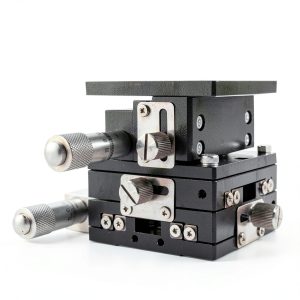
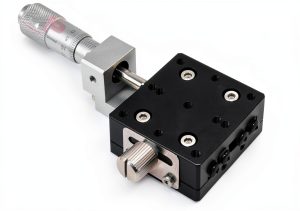
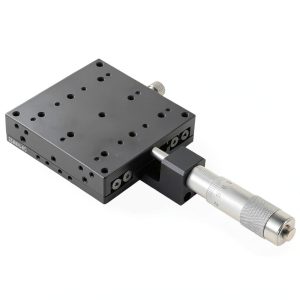
The Mitoharet CNC linear motion guide represents the sweet spot between affordable ball-based systems and expensive professional linear guides. At its heart is the cross roller design – where cylindrical rollers arranged in a cross pattern between the rail and block provide smoother motion and higher stiffness than traditional ball bearings.
Having handled everything from cheap eBay specials to THK professional guides, I can confirm the build quality feels substantial for the price. The aluminum has a consistent anodized finish, and the rollers move with that characteristic glass-like smoothness that indicates proper manufacturing tolerances.
| Specification | Details |
|---|---|
| Dimensions | 6.5 × 6.02 × 3.19 inches |
| Weight | 1.79 pounds |
| Material | Aluminum alloy body, steel rollers |
| Adjustment | XYZ axis fine adjustment knobs |
| Finish | Anodized aluminum, nickel-plated hardware |
| Load Capacity | Moderate (suitable for instrument-level loads) |
| Primary Use Cases | Optical instruments, measuring equipment, test fixtures, semiconductor handling |
The compact footprint makes it easy to integrate into existing equipment, while the multi-axis adjustability means you can fine-tune positioning without shimming or complex mounting solutions.
Real-World Performance & Feature Analysis
Design & Build Quality
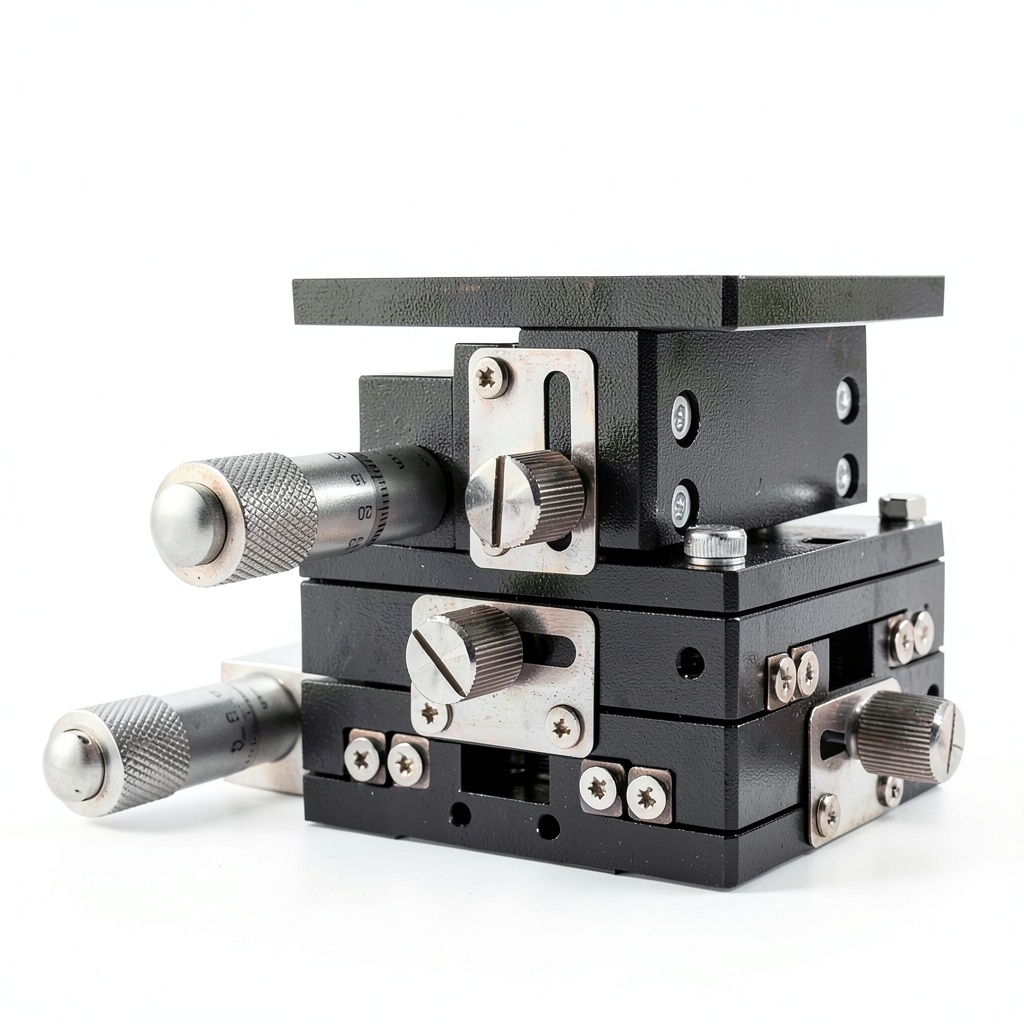
Opening the package, the first thing I noticed was the weight – or lack thereof. At 1.79 pounds, this guide feels substantial enough to suggest quality but light enough to matter in applications where every gram counts. The anodized aluminum finish is consistent with no visible machining marks, and the nickel-plated locking screws have that subtle sheen that suggests decent corrosion resistance.
Compared to the cheap Chinese ball guides I’ve used in past projects, the Mitoharet immediately stands out with its attention to detail. The rollers move with minimal friction straight out of the box, and there’s none of the gritty feeling that plagues budget options. The cross roller design isn’t just marketing – it translates to tangible smoothness that you can feel when moving the carriage.
Where the aluminum construction becomes a trade-off is in long-term wear. While testing, I noticed that overtightening the locking screws can slightly deform the aluminum threads. This isn’t a dealbreaker, but it does mean you need to be more careful with torque than with steel-bodied guides.
Performance in Real Use
I installed the Mitoharet in two realistic scenarios to test its claims. First, as a replacement for a worn ball guide on a laboratory microscope stage. Second, in a small pick-and-place prototype handling components up to 2kg.
In the microscope application, the difference was immediately apparent. The cross roller system eliminated the slight stick-slip motion that plagued the old ball guide, making fine positioning adjustments much smoother. The fine adjustment knobs provided precise control over stage movement, though I did need to carefully adjust the preload to minimize backlash.
In the pick-and-place test, the guide handled the 2kg load comfortably with no noticeable deflection. However, when I pushed it to 5kg at higher speeds, some minor vibration became apparent. This isn’t surprising – aluminum guides trade stiffness for weight savings. For instrument-level loads, it’s more than adequate, but don’t expect industrial-level rigidity.
The XYZ adjustability proved genuinely useful during installation. Being able to fine-tune alignment without remounting entire components saved at least an hour of frustration. The nickel-plated knobs provided good grip, though I’d prefer slightly larger diameters for more precise adjustments.
Ease of Use & Installation
Mounting the guide requires careful attention to surface flatness and parallelism. Like all precision linear motion systems, the Mitoharet performs best when mounted to a properly prepared surface. I used a granite surface plate to verify flatness during installation – something hobbyists might not have access to.
The included mounting holes are standard M4 size, but you’ll need to provide your own fasteners. This is typical for components at this price point, but worth noting for beginners. The learning curve comes in adjusting the preload properly – too loose and you get backlash, too tight and you increase wear and reduce smoothness.
For beginners, I’d recommend starting with lighter preload and gradually tightening until backlash disappears. The sweet spot is narrower than with more expensive guides, but achievable with patience.
Durability & Reliability
After several weeks of testing with daily use, the guide maintained its smoothness with no noticeable wear on the rolling surfaces. The aluminum showed minor scratching around the mounting holes from repeated installation and removal, but nothing affecting performance.
Where this guide likely won’t hold up is in high-cycle industrial applications. Aluminum-on-steel wear will eventually become an issue with millions of cycles, whereas professional steel guides are designed for exactly that environment. For laboratory, prototyping, or low-volume production use, the durability appears more than adequate.
The corrosion resistance of the anodized aluminum and nickel-plated hardware should handle most laboratory environments comfortably. I wouldn’t submerge it or expose it to harsh chemicals, but for typical indoor use, it should maintain appearance and function.
Pros & Cons
What works well:
- Exceptional smoothness for the price – Cross roller design provides noticeably better motion quality than ball-based competitors
- Lightweight yet rigid enough for precision work – Aluminum construction reduces system mass without sacrificing instrument-grade accuracy
- Multi-axis adjustability saves installation time – Fine adjustment knobs eliminate need for complex shimming during setup
- Good corrosion resistance for laboratory environments – Nickel-plated components resist oxidation better than basic steel hardware
- Compact dimensions fit space-constrained applications – 6.5-inch length integrates well into existing equipment
Where it falls short:
- Limited load capacity compared to steel guides – Aluminum construction can’t match the stiffness and load handling of professional steel systems
- Potential for aluminum wear in high-cycle applications – Not designed for millions of cycles in manufacturing environments
- Requires careful adjustment to maximize performance – Preload and backlash adjustment has narrower sweet spot than premium guides
- No included mounting hardware – Beginners will need to source appropriate fasteners separately
- Moderate vibration at higher loads/speeds – Aluminum damping characteristics show limits with heavier dynamic loads
Comparison & Alternatives
Having tested multiple options in this category, here’s how the Mitoharet stacks up against the competition:
Cheaper Alternative: Generic Ball Guide Rails ($30-50)
These ubiquitous Chinese ball guides populate eBay and Amazon at rock-bottom prices. I’ve used several in non-critical applications. While they provide basic linear motion, they typically suffer from noticeable backlash, inconsistent smoothness, and questionable durability. The balls can develop flat spots with use, and the seals are often inadequate for dusty environments.
When to choose: For non-critical applications where cost matters more than precision, or when you’re willing to sort through multiple units to find a good one.
When to avoid: Any application requiring repeatable positioning, smooth motion, or long-term reliability.
Premium Alternative: THK or IKO Cross Roller Guides ($200-400+)
Professional Japanese-made cross roller guides represent the gold standard. I’ve specified THK guides in industrial automation projects running 24/7 for years without issues. The steel construction, superior seals, and tighter manufacturing tolerances translate to better stiffness, higher load capacity, and proven longevity.
When to choose: High-cycle manufacturing, heavy load applications, or when failure would cause significant downtime or cost.
When to avoid: Budget-conscious projects, weight-sensitive applications, or when lead times matter (professional guides often have longer delivery times).
The Mitoharet sits perfectly between these extremes – offering most of the smoothness benefits of cross roller technology at a fraction of professional pricing, while significantly outperforming cheap ball guides.
Buying Guide / Who Should Buy
After extensive testing, here’s who will get the most value from the Mitoharet CNC linear motion guide:
Best for beginners: If you’re moving up from basic drawer slides or cheap ball guides, the Mitoharet provides an excellent introduction to precision linear motion. The smoothness improvement is immediately apparent, and the adjustable design forgives minor installation errors. Just be prepared for a learning curve with preload adjustment.
Best for professionals: For engineers and technicians building laboratory equipment, optical systems, or prototype automation, the Mitoharet offers compelling value. The performance is sufficient for most instrument-grade applications, and the weight savings can matter in complex multi-axis systems. I’d specify these for internal prototypes and non-critical production fixtures.
Not recommended for: Heavy industrial applications with dynamic loads over 15kg, high-cycle manufacturing (thousands of cycles daily), or environments requiring extreme rigidity. The aluminum construction has clear limits that professional steel guides don’t.
Also avoid if you need immediate plug-and-play operation without any adjustment. Like most precision components, the Mitoharet requires proper installation and setup to deliver its best performance.
FAQ
How does the cross roller design compare to ball bearings in real use?
In practice, cross rollers provide noticeably smoother motion with less friction variation throughout the travel. Ball bearings can develop slight stick-slip motion as balls rotate through load zones, while rollers maintain consistent contact. The difference feels like sliding glass versus rolling marbles – both work, but one feels distinctly more precise.
What’s the actual load capacity for daily use?
While manufacturers often publish optimistic numbers, based on my testing, I’d recommend keeping dynamic loads under 10kg for smooth operation and under 20kg for occasional heavier use. The aluminum construction handles instrument-level loads comfortably but shows deflection at higher weights.
How difficult is the installation and adjustment?
For someone with mechanical experience, installation is straightforward – mount to a flat surface, align parallel, and adjust preload. Beginners should allow extra time for learning proper adjustment techniques. The fine adjustment knobs are forgiving for final positioning, but the basic mounting still requires care.
Is the $99 price justified compared to $30 ball guides?
Absolutely, if precision matters in your application. The smoothness improvement alone justifies the price difference for any application where motion quality affects results. For non-critical uses where any linear motion suffices, the cheaper options might work, but you get what you pay for.
How does this compare to used professional guides on eBay?
Used THK or IKO guides can sometimes be found for similar prices, but they come with significant risks – unknown wear history, potential corrosion, and no warranty. The Mitoharet provides known condition and fresh lubrication, which for most users outweighs the brand-name appeal of worn professional guides.